2026
Vibe Engineer
I don't learn engineering from the docs. I build the thing I need, then figure out how it works.
Fullstack
Tools
Role
Design + Fullstack Engineering
Timeline
Ongoing
team
Solo
platform
React / Node / Vector DB / HTML
Learning by Doing
From design into engineering — by shipping real things.
I don't learn engineering by reading about it — I learn it by needing something to exist and then building it until it works. This page collects the experiments where that approach produced something real and used: a knowledge assistant that turns a clusterfuck of PDFs into answers, and a booking-dossier tool that quietly runs a real business every day. The throughline isn't a stack or a framework. It's that the fastest way I learn a system is to ship something on top of it before I feel qualified to.
Artifact 01 — The Logic Engine
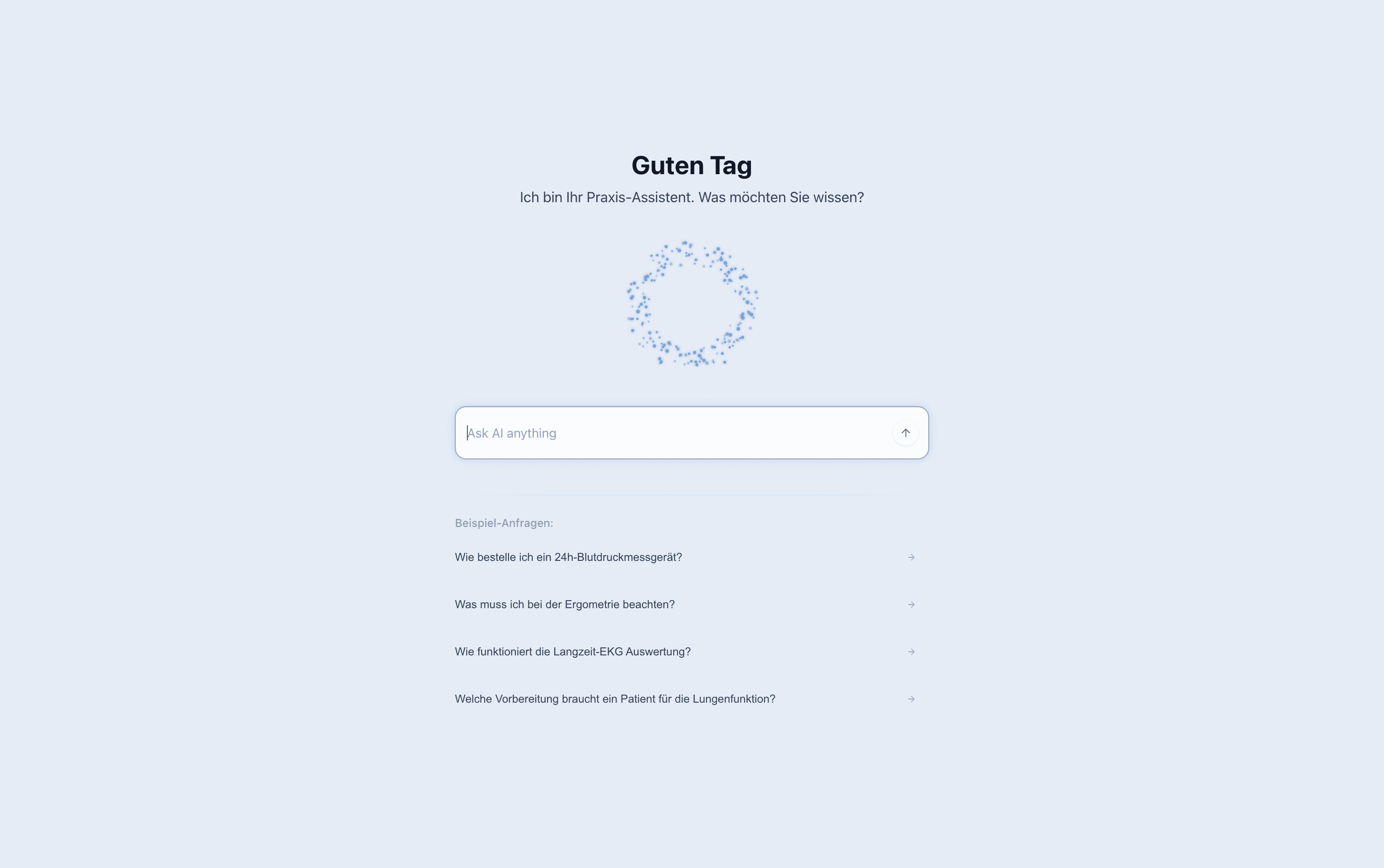
Hausarztpraxis RAG System
The Challenge: Transforming a "clusterfuck" of physical PDF documentation into a structured, interactive digital assistant. The goal was to modernize the practice's knowledge base without disrupting their existing workflows. The core of this system is a secure bridge between unstructured data and a conversational interface — using AI not just for text generation, but for structural parsing.
Vector Data Parsing
PDFs are ingested and chunked into vector embeddings, allowing for semantic search rather than just keyword matching.
Secure Backend Bridge
A Node.js middleware layer sits between the client and the LLM provider, managing API keys and enforcing rate limits. This ensures that sensitive medical data structure is handled compliantly.
Persona Engineering
The "medical persona" isn't a prompt trick; it's a fine-tuned system instruction set that forces the model to cite its sources from the uploaded PDF knowledge base.
Artifact 02 — The Tool That Runs a Business
Drop In Offer Generator
A real internal tool, built for my father's surf-villa business and running it in production every day — the opposite of a demo.
The Problem
My dad ran the surf-villa rentals off a hand-written Word document — recalculating prices by hand for every house and every booking across a messy, multi-range seasonal calendar. Slow, error-prone, and impossible to keep consistent.
The Solution
A single offline HTML file — no server, no install, no account. Pick the houses and dates; it auto-detects the season, applies the right rates and discount rules, and exports a complete branded booking dossier as a PDF. He opens one file and is done.
Season Auto-Detection
A genuinely complex calendar — Peak limited to the Christmas window, some seasons spanning two separate date ranges — resolved automatically from the booking dates, with nights split across boundaries.
Bilingual PDF Export
The hard part. A print-reliable dossier in English or Spanish that actually looks designed — colour-accurate output without the user toggling browser print settings.
Zero Infrastructure
One file, no dependencies, no hosting. It runs on any machine offline — the deliberate opposite of over-engineering for a one-person business.
Outcome
Two experiments that stopped being experiments — a knowledge engine and a tool that runs a real business, both shipped end to end by one person.
What shipped
A RAG assistant turning trapped PDF documentation into cited answers, and a single-file offline tool that generates bilingual booking dossiers — in real production use.
What improved
"AI-assisted" stopped being a buzzword and became a measurable workflow: structured prompts, repeatable components, and a data layer that stays owned by the user, not the model vendor.
What I learned
End-to-end ownership is the real differentiator. When design, systems thinking and engineering share one head, the pipeline stops leaking detail between roles — and the fastest way to learn a system is to ship on it before you feel ready.